
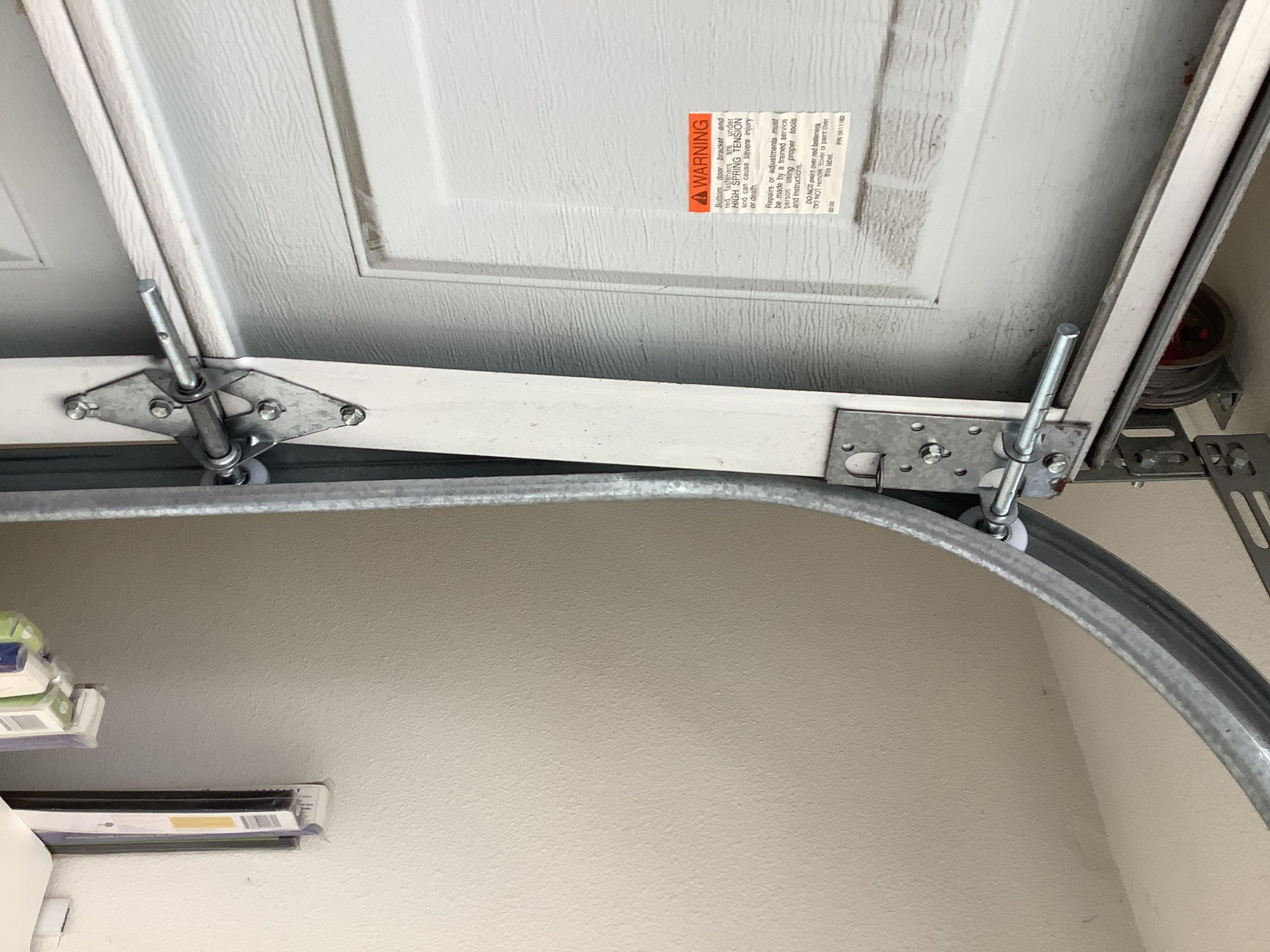

Pull one roller out of a hinge on your garage door and hold it next to the replacement you bought. Compare the wheels first, then look at the shaft behind the wheel. That shaft is the stem, and if the new one is longer or shorter than the old one by even half an inch, the wheel will not sit where the track expects it. People check the wheel diameter carefully and buy on that alone. The stem is the dimension that decides whether the door runs or fights.
Across California, Nevada, and Arizona, Local Garage Doors has earned thousands of 5-star ratings on Google, Yelp, Facebook, and Thumbtack, and wrong-stem rollers are one of the more frequent findings on doors where a homeowner replaced the rollers themselves and the door got worse rather than better.
If your door started binding or got louder after a roller change, this article explains why. For same-day service, call  866-337-1631,
 email info@localgaragedoors.com, or schedule your appointment today.
What Is Garage Door Roller Stem Length and Why Does It Matter?
Stem length is the distance from the back of the roller wheel to the end of its shaft, commonly around four inches on residential doors. It sets how far the wheel sits from the door face, which decides whether the wheel rides centered in the track. A wrong stem causes binding, noise, and uneven wear.
How the Stem Positions the Wheel
A garage door roller is not just a wheel. It is a wheel on a shaft, and the shaft slides into a sleeve on the hinge or bracket. How deep it sits in that sleeve, combined with how long the stem is, fixes the wheel’s position relative to the door face.
The track is set at a specific distance from the door, called the setback. The wheel has to land in the middle of that track channel: not rubbing the back of the track, not riding on the outer lip, and with a small, consistent clearance behind it through the whole travel.
Three measurements have to agree for that to happen:
- Stem length, from the back of the wheel to the end of the shaft.
- Hinge gauge and offset, which determines how far the sleeve stands off the door face.
- Track setback, the distance the track is mounted from the door.
Change any one and the other two have to be re-examined. Track setback in particular is part of the same geometry family as plumb, level, and parallel, covered in garage door rubbing frame. This is why a roller that is the correct diameter can still be the wrong roller. Diameter decides whether the wheel fits the track channel at all; stem length decides where in that channel it sits.
Stem length also interacts with the hinge position on the door. A hinge at the edge of a panel has a different offset from one at the center, which is part of why garage door hinges are numbered by position rather than being interchangeable.
What a Wrong Stem Does
Too long pushes the wheel too far from the door, so it rides against the back of the track channel or climbs the outer lip. The door is held away from the jamb, the seal does not compress properly, and the wheel is loaded sideways rather than straight down.
Too short lets the wheel sit too close to the door, where it can catch the inner edge of the track or fall shallow in the channel. Shallow engagement is how doors come off track, particularly under the sideways load of a door that is already slightly out of square.
Mixed lengths across one door is the worst case and the most common DIY outcome, where a homeowner replaces a few rollers and leaves the rest. Our self-help repair guide covers where that line sits on roller work. Now different parts of the door are held at different distances from the track, and the door twists as it travels.
Note that the top roller on most doors is deliberately adjustable, because the top of the door has to be pulled in tighter against the header than the rest of the panel. Finding that one different from the others is normal.

Symptoms of a Stem Length Problem
The door got worse after a roller change. The clearest signal. A correct roller swap makes a door quieter and smoother immediately. If it got louder, stiffer, or started catching, suspect the stem before anything else.
Binding at a specific point in the travel. Usually where the track geometry changes, at the curve or at a track joint, because that is where a slightly misplaced wheel runs out of clearance.
A scraping or rubbing sound rather than a rumble. A wheel riding on the lip or the back face of the track scrapes. A worn bearing rumbles. The sounds are different, and the distinction is covered in door moves in jerks.
Shiny wear marks inside the track. Look at the track face after a few weeks. A correctly placed wheel leaves an even band down the middle. A wrong stem leaves a line hard against one edge.
Wheels worn unevenly across the set. Side-loaded wheels wear on one face, a pattern also covered in roller wear.
The door does not seal evenly at the bottom. A door held off the jamb by over-long stems will not compress its weather seal.
The opener works harder. Side load is friction, and on a balanced door the opener should only be supplying about 5% of the effort, as spring balance vs opener force explains.
Getting It Right
The procedure is not complicated, but it has to be done before the parts are ordered rather than after.
- Remove one existing roller and measure the stem from the back of the wheel to the shaft end.
- Measure the wheel diameter separately, since the two are independent specifications.
- Check whether your door uses the same roller throughout, and treat the top roller as its own case.
- Match hinge numbers while you are there. A mismatched hinge changes the offset and therefore the effective stem requirement.
- Confirm the track setback and alignment before blaming the roller, because a track mounted at the wrong distance produces identical symptoms. Garage door travels crooked separates the two.
- Replace the full set at once so every wheel sits at the same depth.
- Run the door by hand with the opener disconnected and watch the clearance behind each wheel through the whole travel.
Roller replacement runs $150 to $300 as a total including parts, labor, and tax, covering the full set. If the diagnosis turns out to be track rather than rollers, track straightening runs $150 to $400 and an off-track correction runs $150 to $400, reaching $1,000 in the worst cases.
Where We See This Most
Stem mismatches cluster around particular situations rather than particular climates, though conditions across our California and Arizona markets decide how fast the damage shows.
Doors with a history of mixed repairs. Berkeley, Oakland, Alameda, Martinez, and Vallejo garages with decades of piecemeal work accumulate parts from different suppliers, and stem lengths drift across the door.
After a door replacement on reused hardware. Sacramento, Granite Bay, Lincoln, Stockton, and Modesto installs where a new door went onto existing track and hinges are a common source, because the new hinge geometry rarely matches exactly.
DIY upgrades in the desert. Phoenix, Scottsdale, Chandler, Las Vegas, and Henderson homeowners replacing noisy builder-grade rollers with nylon often buy on wheel diameter alone, and heat plus grit then punishes the resulting side load.
Coastal corrosion hiding the measurement. San Diego, Encinitas, Coronado, and Pacifica rollers can be corroded enough that the original stem is hard to measure cleanly, so the replacement gets guessed.
Heavier insulated doors. Chandler, Anthem, Summerlin, and Sacramento suburb doors at 300 to 400 pounds or more are less forgiving of side load than a light door, so a stem error shows up sooner.
The Bottom Line
Wheel diameter tells you whether a roller fits the track. Stem length tells you where in that track the wheel will sit, and that is what decides whether the door runs quietly or fights itself on every cycle.
Measure the stem on an existing roller before buying anything, treat the top roller as a separate case, and replace the whole set rather than a few. If a door got worse after a roller change, the stem is the first thing to check and the easiest to put right.
If the stem is correct and the door still binds, the problem has moved to track setback or alignment, and that is a measurement exercise rather than a parts exercise.
Call us at 866-337-1631,
email info@localgaragedoors.com.
🗓️Book an appointment online — same-day service available across California, Nevada, and Arizona.
Fully Licensed, CA #1023930 | NV #0087802 | AZ ROC #356696
Frequently Asked Questions About Garage Door Roller Stems
What is a garage door roller stem?
The stem is the metal shaft behind the roller wheel that slides into the sleeve on a hinge or bracket. Its length determines how far the wheel sits from the face of the door, which in turn determines where the wheel rides inside the track channel. It is a separate specification from wheel diameter.
What does it mean when a garage door roller is too long?
An over-long stem holds the wheel too far from the door, so it rides against the back of the track or climbs the outer lip instead of sitting centered. The door is pushed away from the jamb, the bottom seal may not compress evenly, and the wheel takes side load rather than rolling straight, which wears it on one face.
What is the size of a standard garage door roller?
Residential rollers commonly use a 2-inch wheel with a stem of around four inches, but neither figure is universal and both vary with the track and hinge hardware fitted. The reliable approach is to measure an existing roller rather than assume a standard, because a door that has had previous work may not be running standard parts.
How do you measure a garage door roller?
Take two measurements. The wheel diameter across the face of the wheel, and the stem length from the back of the wheel to the end of the shaft. Measure a roller from the middle of the door rather than the top one, since the top roller is frequently a different and adjustable part.
What causes a garage door to bind?
Binding comes from the door being pushed or pulled out of its intended path. Common causes include wrong roller stem length, track that is out of plumb or not parallel, a bent track section, a cracked hinge, or a door that is out of balance. The diagnostic question is whether it binds at one repeatable point, which suggests geometry, or anywhere, which suggests a seized component.
Can you replace garage door rollers yourself?
The rollers in the middle sections are within reach of a careful homeowner working with the door closed and the opener disconnected. The bottom roller is not, because it sits in the bottom bracket, which is under full cable tension and is one of the genuinely dangerous parts of the door. That one is left to a technician.
How do you install a roller on a garage door?
With the door closed and the opener disconnected, the hinge is partially unbolted so the roller can be withdrawn from its sleeve and the replacement slid in, then the hinge is refastened and the wheel checked for free rotation. Work one roller at a time so the door stays supported, leave the bottom brackets alone, and run the door by hand afterward to confirm the clearance behind each wheel is consistent.
Related Articles:
- Garage Door Roller Wear: What Failing Rollers Look and Sound Like, What Type You Have, and What Replacement Actually Involves
- Door Moves in Jerks: Rollers, Hinges and “Stiction” Explained
- Garage Door Travels Crooked: Cable, Drum, Bottom Bracket and Track Alignment Clues
- Door Stops at the Same Spot Every Time: Track Damage vs Panel Flex vs Obstruction