
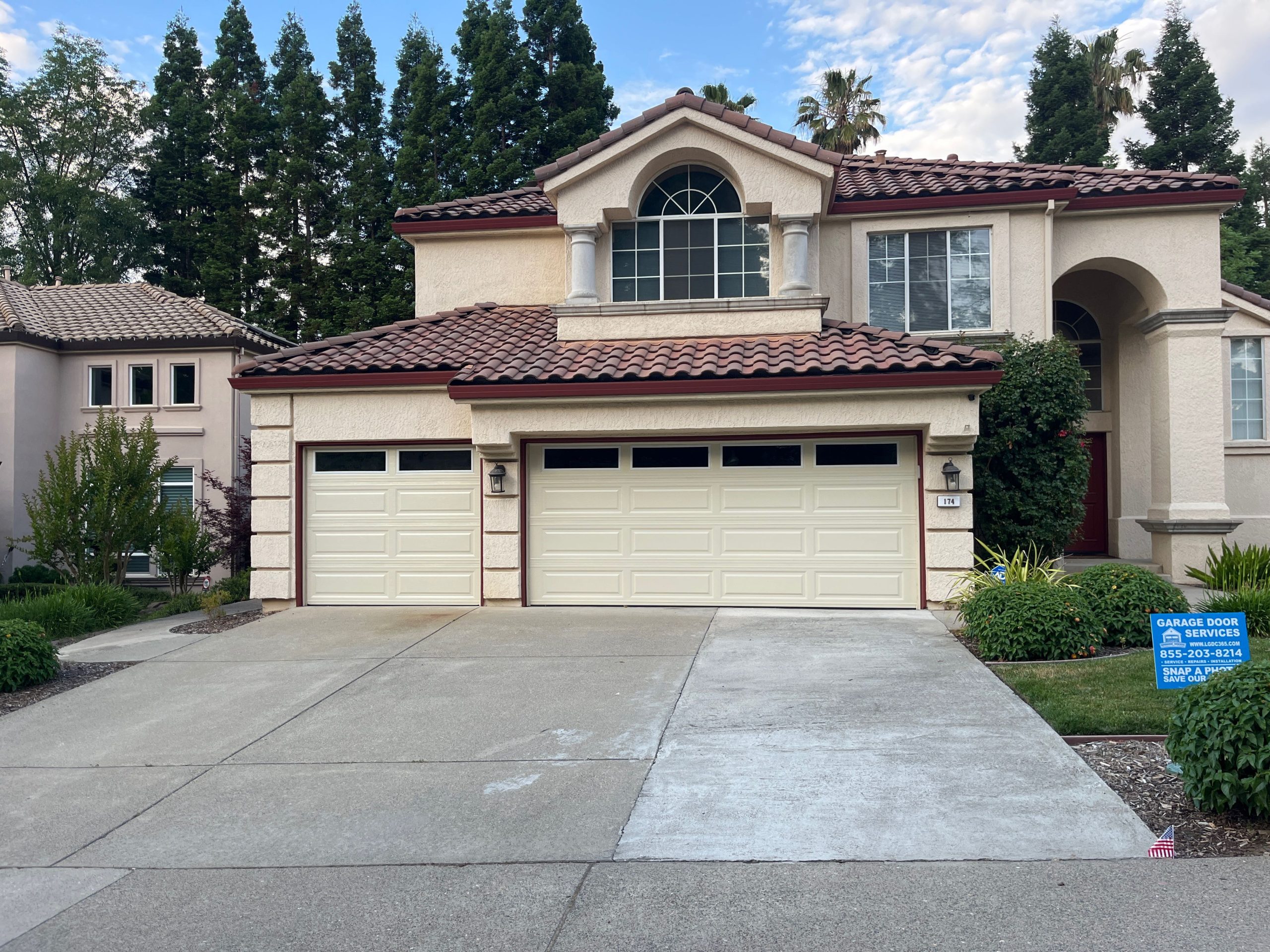

Hook a tape measure on one side of your garage door opening and pull it across to the other, at the brickwork or framing rather than the door itself. Then measure floor to header. Those two numbers are almost certainly a round figure in feet, because residential garage doors have been built to a small set of stock sizes for decades. What surprises people is that knowing your size is only half of what a replacement needs. The opening also has to have room above it and beside it for the hardware that makes the door move.
With thousands of 5-star ratings across Google, Yelp, Facebook, and Thumbtack, Local Garage Doors installs doors across California, Nevada, and Arizona, and sizing questions are where most replacement conversations start and where a few of them quietly go wrong.
If you are replacing a door, planning a build, or working out whether your car will fit, this article covers the standard sizes and the measurements that matter alongside them. For same-day service, call  866-337-1631,
 email info@localgaragedoors.com, or schedule your appointment today.
What Are the Standard Garage Door Sizes?
Standard single car garage doors are 8 or 9 feet wide by 7 feet tall. Standard double car doors are 16 feet wide by 7 feet tall. Eight-foot-tall versions of both are widely stocked, and 10, 12, and 18 foot widths are common. Sizes are quoted width first, then height.
The Stock Sizes You Will Actually Encounter
Residential garage doors are sold in whole-foot increments, and the great majority of American homes have one of a handful of sizes.
Single car doors
- 8 feet wide by 7 feet tall, common in older homes and smaller lots
- 9 feet wide by 7 feet tall, the most widely installed single car size
- 8 or 9 feet wide by 8 feet tall, where extra clearance was wanted
Double car doors
- 16 feet wide by 7 feet tall, the default on most two car garages
- 16 feet wide by 8 feet tall, increasingly common in newer construction
- 18 feet wide by 7 or 8 feet tall, on wider openings
Wider and taller
- 10 or 12 feet wide for single bays built for trucks, boats, or workshop access
- Heights above 8 feet, available as special orders rather than stock
Two conventions are worth knowing. Sizes are always written width first, so a 16×7 is sixteen feet wide and seven feet tall. And the nominal size refers to the door, not the hole: a 16×7 door is manufactured very slightly under those dimensions so it fits a 16 by 7 foot rough opening.
The 7-foot height has been the residential default for a long time, and 8 feet is steadily taking share as vehicles have grown taller. If you are choosing on a new build, the extra foot costs little and removes a constraint you cannot easily undo later.
Measuring Your Own Opening
Four measurements describe a garage door opening, and a replacement quote needs all four rather than just the first two.
- Width of the rough opening, measured at the widest point between the finished jambs.
- Height of the rough opening, measured from the floor to the underside of the header. Measure at both ends, because garage slabs are frequently not level.
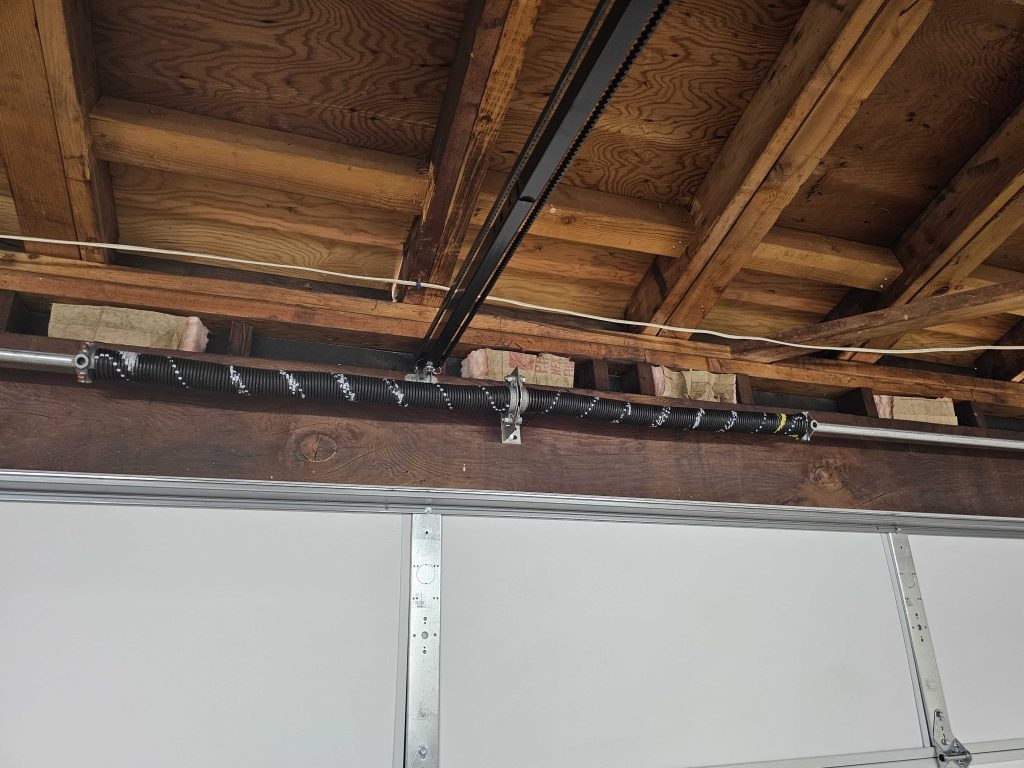
- Headroom, from the top of the opening to the ceiling or the lowest obstruction above it, whichever is lower. This is where the torsion shaft, springs, and the curved track section have to live, along with the opener.
- Sideroom, the flat wall space on each side of the opening, which carries the vertical track and the end bearing plates.
Backroom matters too: the horizontal track runs back into the garage roughly the height of the door plus some margin, so a shallow garage can constrain a tall door.
Headroom is the measurement that most often causes a problem, because people measure the opening and assume the rest will work out. Where headroom is short, low headroom track systems solve it with different hardware. Where there is more room than usual and you want the ceiling back, a high lift conversion goes the other way. The curve itself is a specification too, and track radius covers how 12 and 15 inch sections differ.
Why the Size Alone Does Not Set the Price
Two doors of identical dimensions can differ substantially in cost and in how they behave, because size is only one of several variables.
Material. Steel, aluminum, wood composite, and fiberglass all behave differently in sun, salt, and heat, and our material types page compares them. Garage door materials explained goes further into how each is built.
Insulation. A single layer door and a triple layer insulated door of the same size are different products. Insulation options covers what each construction delivers, which matters in garages that exceed 120°F in summer.
Panel style. Short panel, long panel, flush panel, stamped carriage house, overlay, and full view aluminum all come in the same stock sizes at different prices.
Windows and hardware. Both add cost and both add weight.
New doors installed run $1,000 to $5,000 for steel and $4,000 to $10,000 for custom wood or full view glass, with the overall range across all doors running $1,000 to $10,000 as a total including parts, labor, and tax. Our build a door tool lets you work through the combinations, and how much do garage doors cost covers what moves the number.
The Thing Size Changes Underneath the Door
A bigger door is a heavier door, and the springs have to know about it.
Published weight ranges make the scale clear. A single car steel door runs 90 to 140 pounds non-insulated and 180 to 230 pounds triple layer. A double car steel door runs 180 to 250 pounds non-insulated and 300 to 400 pounds or more triple layer. Solid wood double car doors frequently exceed 400 pounds, and full view aluminum doubles run 300 to 450 pounds.
Springs are specified to a measured door weight, not to a size category. A 16×7 in one construction and a 16×7 in another can be 150 pounds apart, and springs sized for the lighter one will leave the heavier one out of balance from day one. How pros size a torsion spring covers the measurements involved, and choosing springs for heavier insulated doors covers the upgrade case specifically.
If a replacement quote names a door size and says nothing about spring specification, that is the question to ask.
Sizing Patterns Across Our Service Area
Bay Area older stock. Berkeley, Oakland, Alameda, Burlingame, and San Francisco have the highest concentration of 8×7 single doors and narrow openings, built when cars were smaller. Headroom here is frequently tight as well.
Sacramento and Central Valley. Sacramento, Granite Bay, Lincoln, Stockton, and Modesto suburbs run heavily to 16×7 doubles, with 16×8 common in newer tracts where garages double as workshops.
Arizona and southern Nevada new construction. Phoenix, Scottsdale, Chandler, Las Vegas, Henderson, and Summerlin builds favor 16×8 and 18×8, often alongside a separate single bay, and insulated construction is close to standard.
Sierra and foothills. Truckee, South Lake Tahoe, Grass Valley, and Placerville properties more often need taller doors for trucks and equipment, which pushes them out of stock sizes and into special orders.
Coastal California. San Diego, Encinitas, Coronado, and Half Moon Bay have a mix, with older cottages at the small end and newer builds at the large end, and material choice matters more here than size.
The Bottom Line
The standard sizes are simple. Single car doors are 8 or 9 feet wide, double car doors are 16 feet wide, and both come 7 or 8 feet tall, with 10, 12, and 18 foot widths available and taller heights on special order.
The part worth remembering is that the size is the easy measurement. Headroom, sideroom, and backroom decide what hardware the opening can take, and the door’s weight rather than its dimensions decides what springs belong on it. A replacement that gets the size right and those other things wrong will fit the hole and still run badly.
Measure all four, write them down, and bring them to the conversation. It is ten minutes and it makes every quote you receive comparable.
Call us at 866-337-1631,
email info@localgaragedoors.com.
🗓️Book an appointment online — same-day service available across California, Nevada, and Arizona.
Fully Licensed, CA #1023930 | NV #0087802 | AZ ROC #356696
Frequently Asked Questions About Garage Door Sizes
What is the average size of a 2 car garage door?
The most common double car garage door is 16 feet wide by 7 feet tall. Sixteen by eight is increasingly common in newer construction, and 18 feet wide appears on wider openings. Sizes are quoted width first, so a 16×7 is sixteen feet across and seven feet high.
Is 9x9 a standard garage door size?
Nine feet wide is a standard width, but nine feet tall is not a standard residential height. Stock residential doors are generally 7 or 8 feet tall. A 9 foot tall door is usually a special order or a commercial product, and it also requires considerably more headroom and backroom than a typical attached garage provides.
Do garage doors come 10 feet wide?
Yes. Ten feet is a recognized width, usually specified on single bays built for trucks, boats, or workshop access where a 9 foot opening is tight. Twelve feet is also available. Both are less commonly stocked than 8, 9, and 16 foot widths, so lead times can be longer.
What size garage door for a 24x24 garage?
A 24 by 24 foot garage is a standard two car footprint, and the usual choice is a single 16×7 or 16×8 door. Some owners fit two separate 8×7 or 9×7 doors instead, which costs more and adds a center post but gives a stiffer wall and lets one bay stay closed. The 24 foot depth comfortably accepts the horizontal track for either.
Is a 7 foot tall garage door standard?
Yes, 7 feet has been the standard residential height for decades and remains the most common. Eight feet is now widely stocked and is steadily gaining share as vehicles have grown taller. If you are specifying a new build, the extra foot is inexpensive at the time and difficult to add later.
Is a 16 foot garage door big enough for two cars?
For most passenger vehicles, yes, and 16 feet is the standard two car width. It gets tight with two full size trucks or SUVs parked side by side, particularly when opening doors. An 18 foot opening gives noticeably more room where the garage footprint allows it.
What is the most popular garage door size?
Sixteen feet by seven feet is the most installed size in American homes, covering the typical attached two car garage. For single bays, 9 feet by 7 feet is the most common. Those two cover the majority of the residential doors we install and replace.
Related Articles:
- What to Expect When Buying a New Garage Door in California or Nevada (2026 Buyer’s Guide)
- How Much Do Garage Doors Cost? A Cost-Factor Guide for California, Nevada, and Arizona Homeowners
- Garage Door Materials Explained: How Steel, Wood, Aluminum and Fiberglass Are Built
- Standard vs Custom Garage Doors: When Custom Is Actually Worth It