
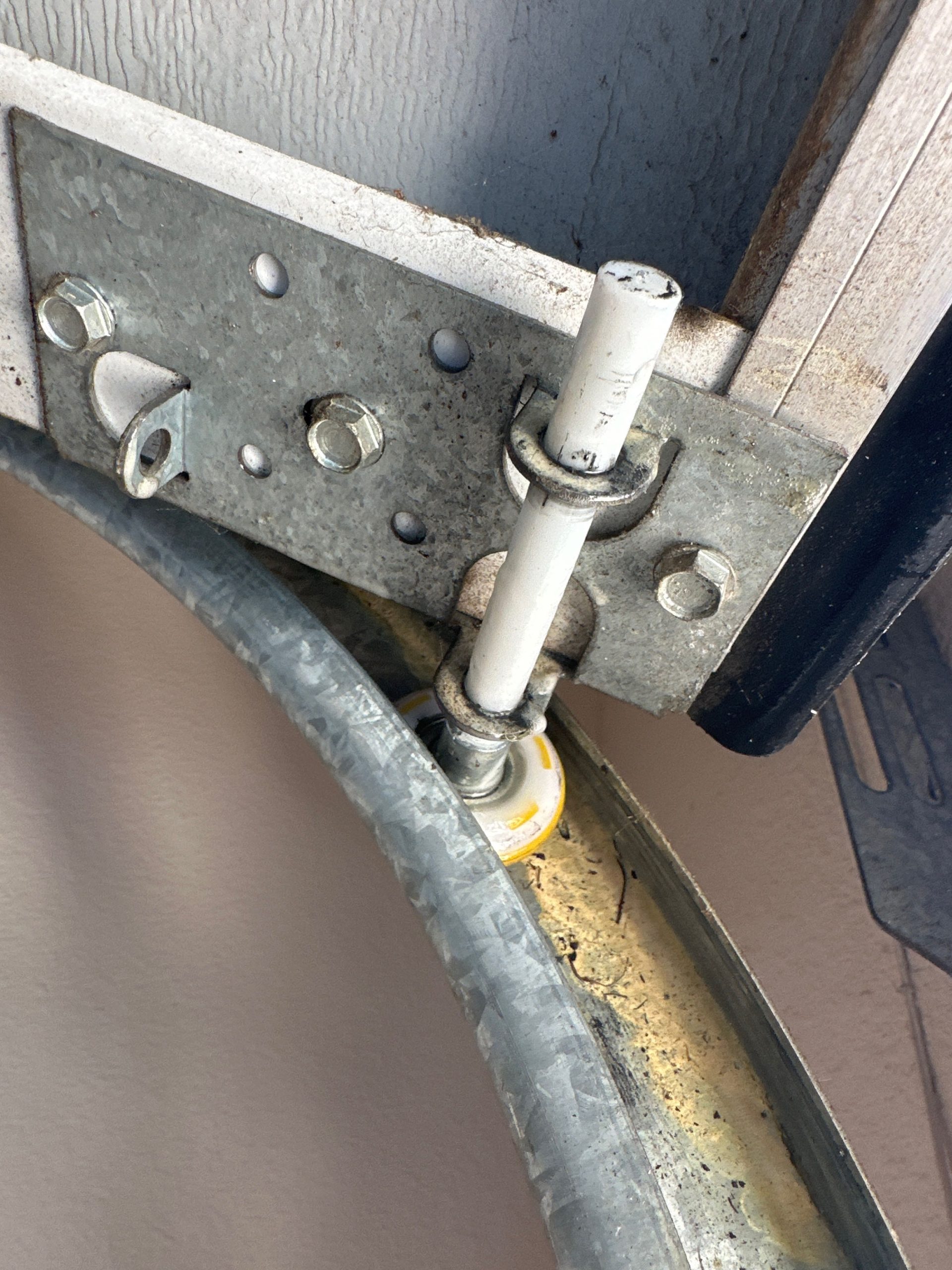

Raise your garage door halfway, then look at the edge of one of the wheels riding in the track. You are looking for the material and for how the wheel is attached to its axle. A bare steel wheel with an exposed set of ball bearings looks and sounds nothing like a white nylon wheel on a sealed cartridge, and the difference between them is most of the difference between a door you hear from the back bedroom and one you do not. On a double-car door there are ten to twelve of these, and they are among the cheapest parts on the whole system.
With thousands of 5-star ratings across Google, Yelp, Facebook, and Thumbtack, Local Garage Doors fits rollers across California, Nevada, and Arizona, and the single most requested upgrade we get asked about is the one that makes an existing door quieter.
If you are choosing replacements or trying to work out why your door is loud, this article compares the types. For same-day service, call  866-337-1631,
 email info@localgaragedoors.com, or schedule your appointment today.
Which Garage Door Rollers Are Best, Nylon or Steel?
Nylon rollers on sealed bearings are the best choice for most homes. They run significantly quieter than steel because the wheel does not transmit noise into the track, and sealed bearings keep grit out. Steel rollers cost less and carry more weight, which suits heavy doors and high-cycle use where noise matters less.
The Three Variables That Actually Differ
People talk about roller “types” as if there were three products. There are really two independent choices, and a quality tier that cuts across both.
Wheel material: nylon or steel. This governs noise more than anything else. A nylon wheel damps the contact between the door and the track. A steel wheel transmits it, which is why a steel-wheeled door sounds metallic even when everything is adjusted correctly. Steel carries more load and tolerates more heat, so it survives on heavy and commercial doors where nylon would deform.
Bearing type: unsealed or sealed. An unsealed roller has its ball bearings open to the air. A sealed roller encloses them in a cartridge with grease retained inside. This governs lifespan far more than the wheel material does, because almost every roller that fails has failed at the bearing rather than at the wheel.
Bearing count and build quality. Cheap rollers carry few balls in a thin race. Better ones carry more, in a heavier race, with a thicker stem. Two rollers that look identical from three feet away can differ several times over in service life.
The combinations that actually get sold:
- Steel wheel, unsealed bearings. The builder-grade default. Cheapest, loudest, shortest-lived. This is what is on most doors that have never been serviced.
- Nylon wheel, unsealed bearings. Quieter at first, but the open bearing still admits grit, so the quiet does not last as long as people expect.
- Nylon wheel, sealed bearings. The upgrade most homeowners want. Quiet, long-lived, and the sealed cartridge is what carries the lifespan rather than the nylon.
- Steel wheel, sealed bearings. For heavy doors and high-cycle use where load matters more than noise.
A fourth variable, the length of the roller’s stem, is a separate specification from all of the above and is a common source of binding when it is wrong. That belongs to its own discussion rather than this comparison, though it is worth confirming before you order anything from our rollers page.
Noise, Lifespan and Cost Compared
Noise. Nylon on sealed bearings is the quietest combination by a clear margin. Most of what people call a noisy door is the wheel and bearing, not the opener, and swapping rollers is usually a bigger improvement than swapping the motor. A belt-drive opener on steel rollers is still a loud door.
Lifespan. The sealed bearing is the deciding factor. An unsealed roller in a dusty garage can be rough within a few years, while a sealed one on the same door keeps running smoothly for many. Nylon wheels do wear, but they generally outlast the open bearings fitted alongside them.
Load. Steel carries more. On a triple-layer insulated double-car door at 300 to 400 pounds or more, or on a door that runs eight or ten cycles a day, steel on sealed bearings is a reasonable specification. On a typical residential door, nylon is not working near its limit. Counting your real daily cycles, as cycle count math sets out for springs, is the same exercise that tells you which roller grade to buy.
Heat. Garage interiors here exceed 120°F in summer and reach 130°F in Phoenix. Nylon handles that fine in residential service, but heat thins the grease in unsealed bearings quickly, which is another argument for sealed.
Cost. Roller replacement runs $150 to $300 as a total including parts, labor, and tax, and that range covers the full set rather than individual wheels. The difference in parts cost between grades is small relative to the labor, which is the same whichever rollers go on. That economics is the same argument as choosing a spring cycle rating: pay once for the better part rather than twice for the labor.
Rollers are always replaced as a complete set. Mixing old and new, or mixing types, puts different rolling resistance on each side of the door.
What Failing Rollers Do to the Rest of the Door
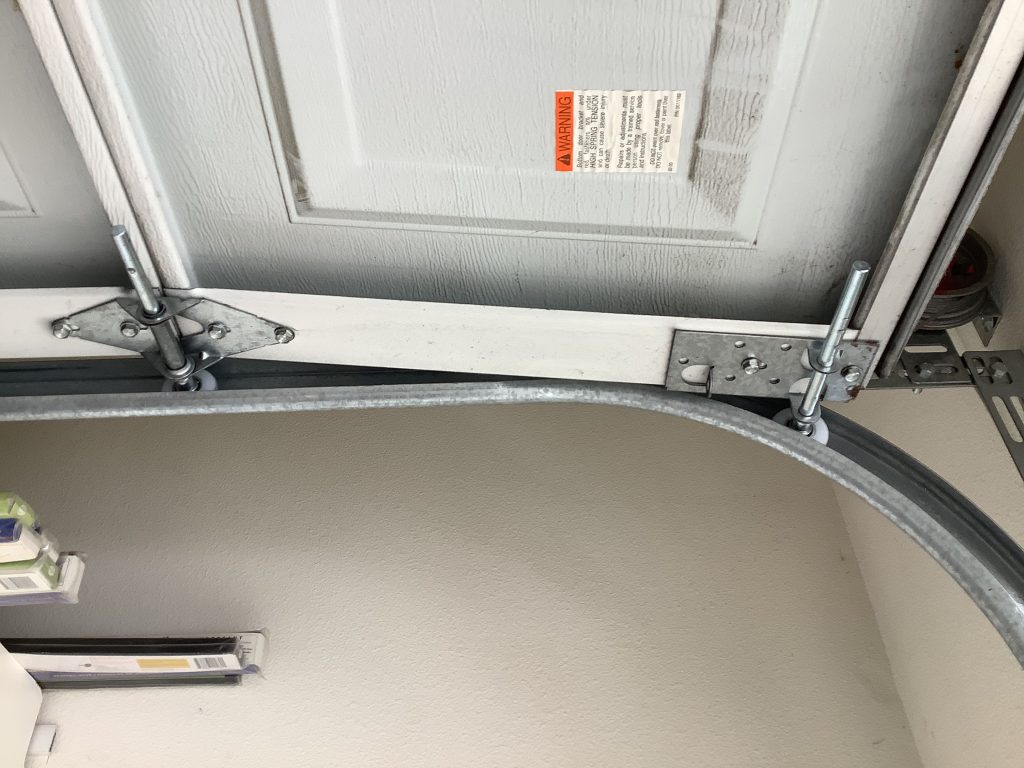
A seized roller is not just a noisy roller. It is friction the rest of the system has to overcome.
The opener carries the extra load. On a balanced door the motor supplies about 5% of the work. Dragging rollers raise that figure, and an opener that should give 12 to 20 years gives considerably less, as covered in spring balance vs opener force.
The door moves in jerks. Stiction from rough bearings produces the stop-start pattern explained in door moves in jerks.
Hinges take side load. A wheel that will not turn drags its hinge and the panel it is bolted to.
The track wears. A skidding wheel polishes and eventually scores the track face, and a scored track will chew through the new rollers too unless the track is addressed at the same time.
Cold makes it worse. In Truckee, South Lake Tahoe, Reno, and Carson City, thickened grease in unsealed bearings turns a marginal roller into a binding one every winter.
For what a failing roller looks and sounds like, and what replacement involves, our guide to roller wear goes through the diagnosis in detail. This article is about choosing the replacement rather than spotting the failure.
Which Type Suits Which Garage
Roller choice is one of the few decisions where local conditions should genuinely change the answer, across both our California and Arizona service areas.
Attached garages with living space above or beside. Berkeley, Oakland, Alameda, Burlingame, Palo Alto, and San Francisco homes with bedrooms over the garage get the clearest benefit from nylon on sealed bearings. This is where the upgrade is most worth paying for.
Desert garages. Phoenix, Scottsdale, Chandler, Goodyear, Las Vegas, Henderson, and Spring Valley combine extreme heat with fine airborne grit. Sealed bearings matter more here than the wheel material does, because unsealed bearings ingest dust and fail early regardless of what the wheel is made of.
Coastal homes. San Diego, Encinitas, Coronado, Half Moon Bay, and Pacifica rollers face salt air that corrodes bearing races. Sealed cartridges hold up considerably better.
Heavy and high-use doors. Chandler, Anthem, Summerlin, Henderson, and the Sacramento suburbs are full of garages used as the main entrance on heavy insulated doors. Steel on sealed bearings is defensible here.
Workshop and detached garages. Stockton, Modesto, Woodland, and Patterson detached garages where noise is not a concern can run steel happily, provided the bearings are sealed.
The Bottom Line
The choice that matters most is not nylon versus steel. It is sealed versus unsealed, because the bearing is what fails.
For a typical residential door, nylon wheels on sealed bearings are the right answer: quiet, long-lived, and comfortably within their load rating. Choose steel on sealed bearings when the door is genuinely heavy or runs many cycles a day and noise is not a priority. Avoid unsealed bearings in either material, particularly in desert and coastal garages.
Replace them as a full set, and remember that the labor is the same whichever grade goes on. That is what makes the better roller the cheaper one over the life of the door.
Call us at 866-337-1631,
email info@localgaragedoors.com.
🗓️Book an appointment online — same-day service available across California, Nevada, and Arizona.
Fully Licensed, CA #1023930 | NV #0087802 | AZ ROC #356696
Frequently Asked Questions About Garage Door Rollers
Which is better nylon or steel garage door rollers?
For most homes, nylon. It runs noticeably quieter because the wheel does not transmit contact noise into the track, and it is comfortably strong enough for a residential door. Steel is better where the door is very heavy, where cycle counts are high, or in commercial settings, since it carries more load and tolerates heat better.
Are nylon garage door rollers quieter than steel rollers?
Yes, clearly so, and it is usually the single biggest noise improvement available on an existing door. The nylon wheel damps the contact between the door and the track rather than transmitting it. Pairing nylon wheels with sealed bearings adds a further reduction, since rough open bearings are a separate noise source.
How long do nylon garage door rollers last?
It depends far more on the bearing than on the wheel. Nylon rollers on sealed bearings last many years in normal residential use, while the same wheel on unsealed bearings can be rough within a few, especially in a dusty or coastal garage. Cycle count matters too: a door used as the main household entrance ages its rollers several times faster than one opened twice a day.
What are the advantages of nylon rollers?
Quieter operation, no metal-on-metal contact with the track, no rust at the wheel, and gentler wear on the track face itself. They also tend to feel smoother by hand, which makes it easier to spot a genuine binding problem when one develops.
Do nylon rollers need lubrication?
The nylon wheel itself does not, and lubricant on the wheel face is counterproductive because it attracts grit. What needs attention is the bearing and the stem. Sealed-bearing rollers need essentially none, which is part of their appeal. Unsealed ones benefit from periodic lubrication, which a lube and tune at $95 to $195 covers along with the hinges and track.
Do nylon garage door rollers wear out?
They do, but usually later than the bearings they are mounted on. A worn nylon wheel develops flat spots, a lip at the edge, or visible scoring. If the wheel is worn unevenly across a set, the cause is frequently track alignment rather than the rollers themselves, so the geometry is worth checking before fitting replacements.
What are the signs that garage door rollers need to be replaced?
Grinding or squealing that follows the door through its travel, visible wobble in a wheel, flat spots, a wheel that will not spin freely by hand, and chipped or cracked nylon. Our guide to roller wear covers how each failure sounds and what it means.
Related Articles:
- Garage Door Roller Wear: What Failing Rollers Look and Sound Like, What Type You Have, and What Replacement Actually Involves
- Door Moves in Jerks: Rollers, Hinges and “Stiction” Explained
- Spring Balance vs Opener Force: Why the Opener Shouldn’t Do the Heavy Lifting
- Garage Door Inspection Checklist: What Every Homeowner Should Know